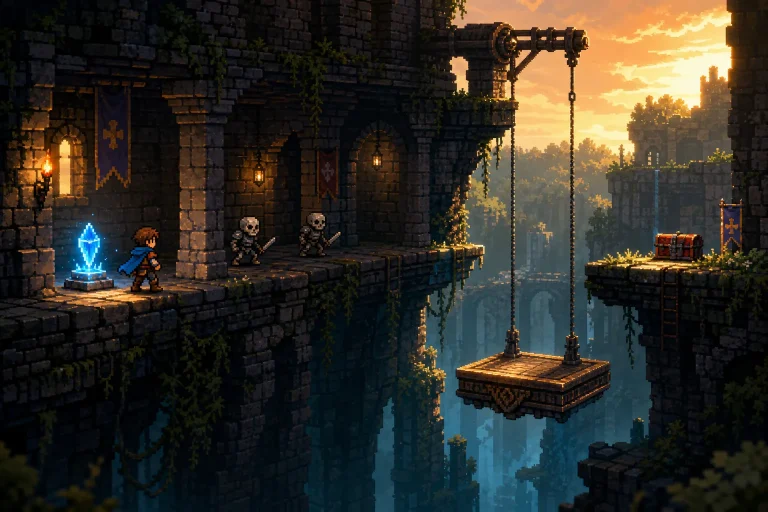
Build Better Sandbox Paths by Testing Your Own Decisions
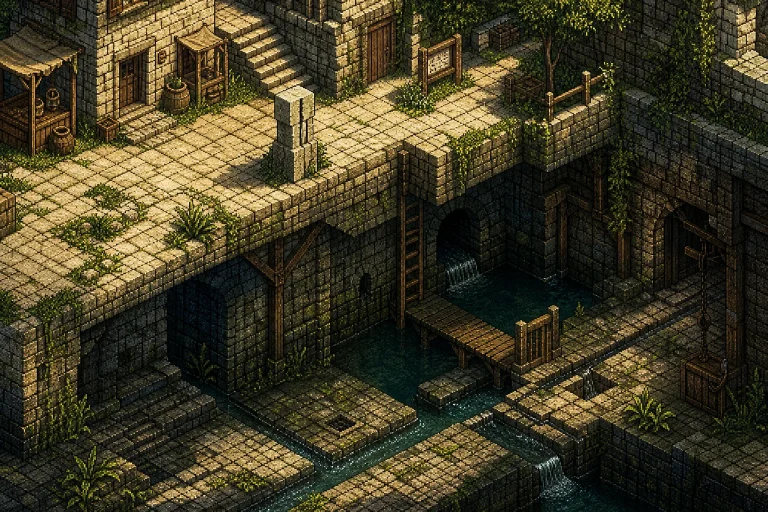
A shared sandbox town can look impressive and still be awkward to use. Players squeeze through decorative gates, miss stairways…
Explore writing on classic game design, the machines behind play, arcade spaces, imagined worlds, and the culture that formed around them.
A shared sandbox town can look impressive and still be awkward to use. Players squeeze through decorative gates, miss stairways…
A group finishes an online session with two competing explanations. One player thinks the team should push objectives earlier; another…
Your healer is ready, your defender is wounded, and an enemy archer has a clear shot. Whether healing is the…
A half-built bridge can reveal every weakness in a multiplayer construction team: one player raises a tower, another changes the…
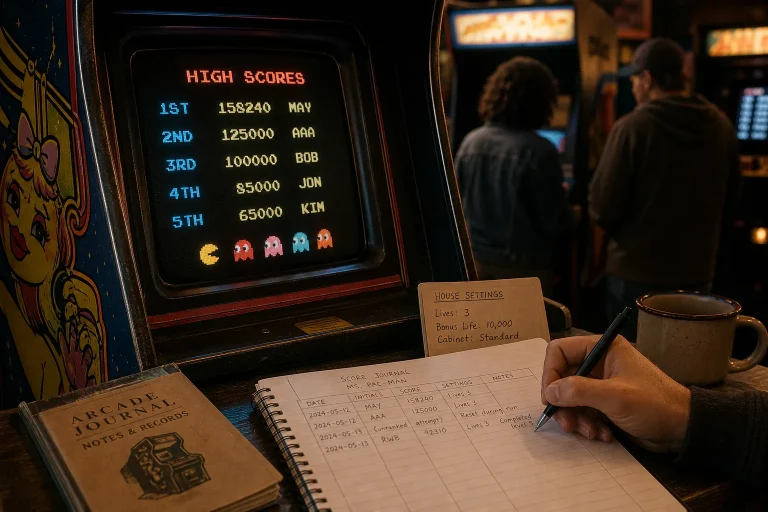
A local score table can preserve a group’s memory of play without becoming a measure of who belongs. Explore rivalry,…
A small tile set can make a game world feel like somewhere, not a patchwork. The trick is to give…
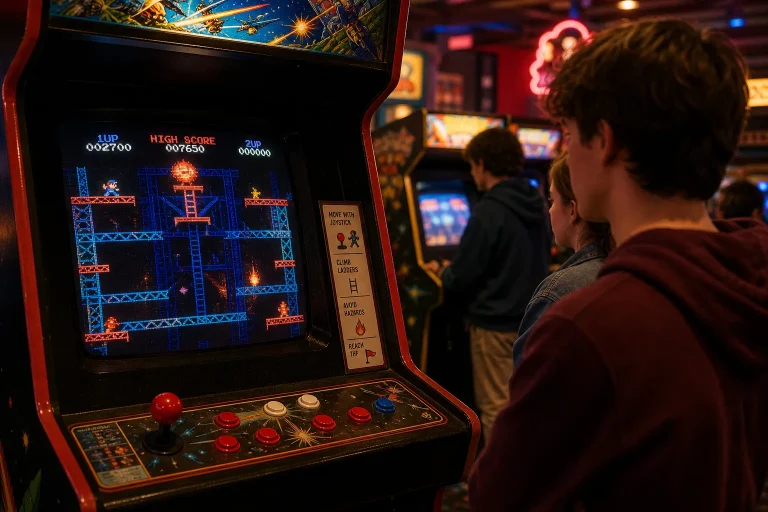
An arcade cabinet makes play visible before anyone inserts a coin. Its controls, screen and position in the room invite…
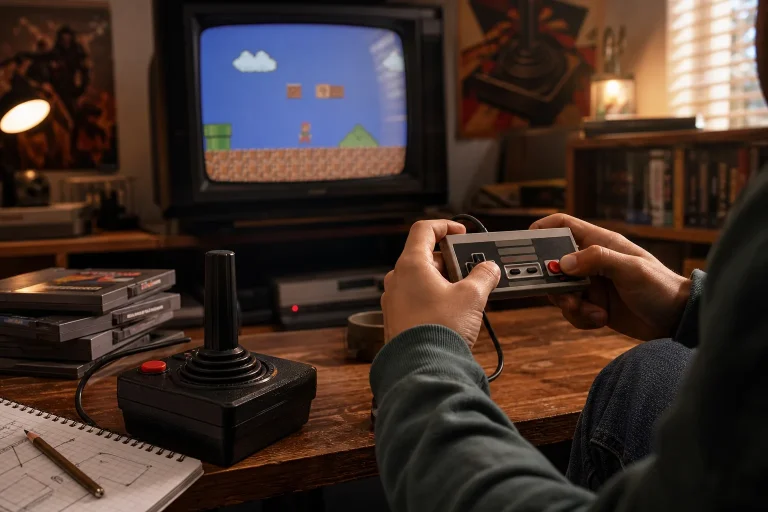
The NES pad and Atari joystick taught different kinds of movement through their layouts. Their contrast shows how button placement…
A checkpoint does more than save progress: its position determines how often players can practise a hard section, and how…